7/31/09

Seriously Hilarious


Consider Will Arnett. He had trained as a dramatic actor and had a less than notable career doing voice-overs until his big break playing GOB on "Arrested Development." Why success then? Why this show? Because it was a comedy. He finally stopped trying to be seriously serious and basically mocked his own dramatic personae as part of a comedy ensemble. 

And...now he's reading Judy Blume and everything is wonderful. 

Alec Baldwin is a considerably less extreme example. He has had a long and relatively successful film career playing primarily dramatic roles. But he's so serious that it's almost laughable. Especially since so much of his dialogue in these movies is so painfully, painfully cheesy. Whip out the nachos and check out these Baldwin character quotes from 2001's Pearl Harbor

"There's nothing stronger than the heart of a volunteer."

"I want you to do me a favor." 
(What's that, Colonel?) 
"Pray for both of us."

"Victory belongs to those who believe in it the most and believe in it the longest. We're gonna believe. We're gonna make America believe, too." 

"You know, at Pearl, they hit us with a sledgehammer. This raid, even if it makes it through, it'll be a pinprick-- but it'll be straight through their hearts." 

Now, that's the kind of dialogue that makes me physically cringe. In a drama, it doesn't work, because it's too much. 

But-- when the environment is changed, when he's supposed to be over-the-top and melodramatic, he is in top form. I honestly think his best work has been on "30 Rock." He delivers lines with the same straight-faced, earnest cheesiness, but because they're meant to be funny, it runs smoother than a waxed leg. 

7/27/09

Oh, That's Who That Is: Tom McGowan


You probably know him as Pat, the pleasantly plump camp counselor from Heavy Weights who inspires his chubby charges-- and himself-- to fight evil diet empires and get healthy the right way! However, he pops up again and again...in the strangest of places. 

He has had minor supporting roles (usually as a co-worker, or the husband of a co-worker, or a store clerk) in Sleepless in Seattle, Searching for Bobby Fischer, The Birdcage, and Bad Santa. 

His small but more memorable appearances are quite notable. In the incredible indie film 12 and Holding, he plays the passive patriarch of a family with the worst health habits, ever (more on this film and this family in future posts). In Ghost World, he plays the passive friend of Seymour (Steve Buscemi) who helps facilitate his romance with Enid (Thora Birch). 

He took more active roles (not larger, just...less stereotypical) in the late 1990's. You may remember him from As Good As It Gets as the Maitre' D who insists that Melvin (Jack Nicholson) must wear a blazer to enter the restaurant for his fancy date with Carol (Helen Hunt). In True Crime, he was the only fellow reporter willing to help Steve Everett (Clint Eastwood) chase a life-or-death story about a possibly innocent man sentenced to be executed for murder. 

What I find fascinating about McGowan is that he maintains a professional integrity and dedication to every part I've seen him in. He has never been the star of a "serious" film, and probably never will be. But his characters are all distinct, and he adds subtleties to each role that make him one of those extremely memorable supporting players. 

Plus, he's probably made a very good living from acting, despite his lack of prestige. In addition to the films mentioned above, he has had roles on TV shows ranging from "Down the Shore" (1992) and "Coach" (1994) to "Sabrina the Teenage Witch" (1996), "Frasier" (1998), "Curb Your Enthusiasm" (2001), "Everybody Loves Raymond (2003), "The War At Home" (2005), "Hannah Montana" (2007) and "CSI" (2008). 

This is, I think, the most realistic profile a successful actor that you could find. After earning an MFA from the Yale School of Drama (just like Meryl Streep!), he was nominated for a Tony Award for Best Actor in a Play for his performance in "La Bete." It was after this blaze of glory that he fell into a steady stream of minor but memorable roles in film and television. He might not have won an Oscar or made headlines, but Tom McGowan has contributed much to the past two decades of television and film with his comedic timing, guileless face and professional commitment. 

So the next time you catch a re-run of "Frasier" or make the wise, wise choice to rent 12 and Holding, you can say, "oh, that's that guy from...shit...what was it..." without drawing a blank and making yourself look like a pretentious ass. 

Which One Are YOU?!


Close your eyes, if you will, and reflect on the female ensembles that have graced the big and small screen over the past several decades...they can be seen in Sex and the City, The Golden Girls, Designing Women, The Babysitter's Club, Desperate Housewives, The Lipstick Jungle, The Sisterhood of the Traveling Pants, and plenty of others. 

I have overheard (and, shamefully, participated in) a number of painful discussions in which the central question was: "which one are YOU?" Quizzes like "Which SATC character are U" have spread across the internet like the clap, and frankly, it's making me sick. There's a reason that most women can't single out one character to identify with: all of these women, by themselves, are totally one-dimensional. It is only as a combined unit that they create the ultimate female package. This is why women keep watching the shows (or why 9 year olds keep reading the books). They see a little bit of themselves in each character, and so can spend endless hours debating which character they are "most like." These shows serve as a sort of mood ring for women. "I was totally acting like Samantha last night but this morning I woke up and felt kind of like Carrie..." 

Every woman fits in her neat little box and when she acts, in any way, differently than she is supposed to, it is a major emotional moment on the show. For example, when Blanche decided not to sleep with a professor to earn a higher grade on The Golden Girls. It wasn't a big deal because it happened, it was a big deal because it was Blanche! The Slut! Or when Samantha broke down at Miranda's mother's funeral on Sex and the City. Yes...how significant, for a friend to express sympathy at the funeral of her best friend's mother. Except it totally is a huge deal, because it's Samantha! The Slut! With No Emotions! There was an entire book in the BSC series dedicated to the fact that Mary Anne got a makeover without telling anyone first...because she is The Wimp! 

The Golden Girls: 
Rose: The Stupid One 
Dorothy: The Wry Spinster 
Blanche: The Slut
Sophia: The Peanut Gallery 

Sex and the City: 
Miranda: The Lesb...the Smart One 
Charlotte: The Prissy One
Samantha: The Slut 
Carrie: The Annoyi...the Funny One 

The Babysitter's Club
Dawn: The Hippie
Stacey: The Slutty Diabetic Fashionista 
Jessi: The Black Ballerina 
Mary Anne: The Wimp 
Mallory: The...One With A Lot of Siblings 
Claudia: The Stupid Asian Fashionista
Kristy: The Lesb...The Bossy Tomboy 

These lists could go on and on. Why must groups of women contain only one-dimensional people? Is it just easier for the writers to keep track of them? Is it easier for the VIEWERS to keep track of them? Are we more comfortable thinking that every woman is that simple, that she only has aspect of her personality that guides all of her actions like a magnet? In groups, women are shoved into small personality boxes, because otherwise, what would you have? A group of women with similar interests and personalities having interesting non-scandalous discussions about their lives, and maybe politics, movies, and art? EW! 

It's only when women appear alone, or in smaller groups, in ensemble casts, that they are allowed to fit into more than one identity. Prime example? Elaine on Seinfeld. She had her slut moments, her funny moments, her prissy moments, and her smart moments, yadda yadda yadda...in other words, she was as close to a normal human being as you'd be likely to find on prime time. 


7/23/09

The Judging Panel


It's not hard to tell the difference between a guilty-pleasure reality competition show and a genuine, talent-based competition. However, I think I have found one key clue: the judges. 

If the judges usually agree, it's probably legitimate (Project Runway, Top Chef). If they are really experts in the field and have a good eye for talent, they will logically reach the same conclusions. Sometimes it's a matter of taste-- but if the judges, across the board, agree in the quality of performance or product, it's a higher-quality show. 

However-- you know it's a joke when the judges are always fighting (American Idol, America's Next Top Model). I've often felt that their comments and judgements were arbitrary, unfounded in reality and even self-contradicting...and this is a huge signal that they have no idea what they're talking about. 

What's the most annoying to me is when the winner on a low-quality show (ANTM) becomes very, very clear later in the season. For example, Danielle (now Dani). She won most competitions, was completely gorgeous and polite, and was a sure bet to win. So what did the judges do to make it seem as if there was any doubt? They started telling her (out of nowhere) that she needed to work on her accent. Yes. Her accent surely will destroy her career as a model. It's a stupid, cheap way to create 'suspense' and is a red alert on the reality show bullshit detector. 

I just noticed that the two examples of quality shows I used are on Bravo...and the two poor examples have the word "America" in the title. Perhaps another indicator of quality. If it has the name of our country in it, it sucks. If it's on Bravo, it's awesome. So simple! 

Get Smart: Anne Boleyn


Introducing the first of another ongoing series! 

I believe that the general dumbing-down of movies, TV, music et al is part of a vast conspiracy to create a population of ignorant, robotic underlings who will self-destruct and allow the GOP to achieve world domination. 

That being said, this new series will provide you with a chance to experience the things you loved in recent releases by watching incredible, classic, older movies-- back when they were...better. 

If you liked: The Other Boleyn Girl 
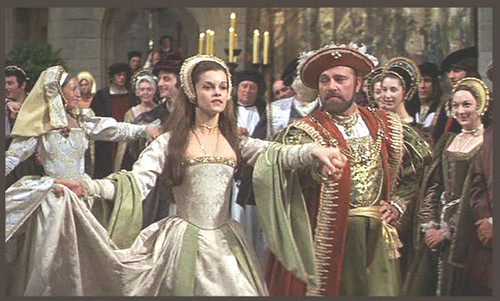
You should watch: Anne of The Thousand Days 

Common Elements: The more-or-less true story of Anne Boleyn's rise to power by her seduction of King Henry VIII. 

What Makes The Old One Better: Gorgeous, more realistic costumes. Incredible acting from an all-star cast. Attention to detail. Less of a focus on gratuitous sex and more of a focus on the political and social implications of their love affair. 

Rent it. 

It's Funny Because It's...Not True


I get so peeved when the hilarity of a show is based on the fact when it would never happen in real life, especially when it actually DOES happen to people who are oppressed...

Confused? 

Exhibit A: "Hung," a new series on HBO about a white adult male who goes into prostitution to earn money. Critics are calling this show witty, daring, and hilarious. Why? Maybe the dialogue is great. Maybe the acting is superb. Or maybe we're all comfortable seeing an extremely ugly reality of society (women, often of color) forced into the sex industry because they literally have no other options. An adult white male...well...he has other options. This show will probably be a huge hit, just like...

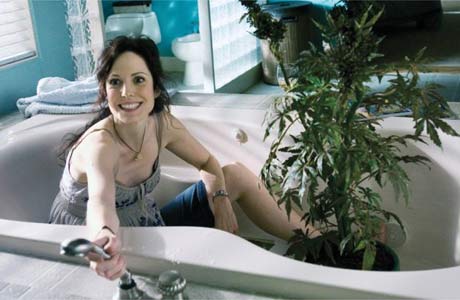
Exhibit B: "Weeds," a Showtime original with four seasons. It's been lauded as witty, daring, and hilarious. It's about a single suburban mom who deals pot to make a living. Yes, the dialogue rocks. Yes, the acting is great. But this show ignores and makes a mockery of (I know that doesn't make sense) the fact that the people who are truly forced into professional drug dealing tend to be poorer men of color and not suburban moms. ("Forced" not in the sense that someone is holding a gun to their head but in the sense that in their communities, what other options do they have? I don't say this lightly. I watch it happen.) 

If "Hung" were about a middle-aged woman of color who becomes a prostitute because she couldn't find another way to make money, it would probably not be a comedy. If "Weeds" were about a young single dad of color who turned to drug dealing, it would probably not be a comedy. 

Keep laughing, assfaces. Making light of society's actual issues while ignoring the problems at hand is just one more way to waste our lives...and that's really what American TV is all about. 

Lemon Porn

Liz: "How do men want women to act on a date?" 

Frank: "Like they were in a porno." 

There are two television shows that I love (almost) unconditionally. The ensemble casts are stellar, the dialogue is witty, the plots intriguing, the guest stars surprising, etc. 

But the one thing that they both have in common is their treatment of porn and women. Someone get me my fecking smelling salts. 

On the pilot of "30 Rock, Liz Lemon (Tina Fey) ends up..liberating herself, I guess, by getting drunk and joining a bunch of strippers onstage. This set the scene for a pattern of what I see as a huge oxymoron: Lemon is a self-proclaimed feminist, an issue that comes up often. She says things like "women just aren't allowed to have real bodies anymore" and discourages her best friend from using her sexuality as a tool to advance professionally. 

YET. 

The show consistently uses porn as a punch line. Every male character (except Kenneth, who is sort of asexual) shows great interest in porn, often specific kinds (we know that Frank is a butt man). Tracy Jordan (Tracy Morgan) even, at the end of season 2, becomes a billionaire with his invention of a pornographic video game. 

If Fey is one of those feminists who do not see porn as an issue, there are still numerous other anti-feminist (or at least eyebrow raising) things about the show that just don't make Lemon's constant proclamations of feminism seem true. Her character is constantly teased for being frumpy, fat and/or masculine, and yet she is clearly a woman who is considered beautiful by current social standards, and (especially in later seasons) wears clothing that is really revealing and traditionally feminine. And that is totally fine! I'm not saying you have to butch it up to be a feminist. It's just-- why is she being harped on all of the time when she is petite, with fair skin, a pretty face, a feminine wardrobe and flawless hair? 

I think it's the "She's Not Plain, She's Beautiful" syndrome. Lemon is ugly when she's wearing glasses...but put her in a fancy gown when she has to accompany Jack (Alec Baldwin) to a fancy party, and suddenly she's hot. 

Oh-- and "Weeds" is all about porn, "MILF" syndrome, etc. It's really cool that Nancy Botwin (Mary Louise Parker) is shown to be so in charge of her own sexuality, but it's like...if there is one more reference to porn, they'll have to change the name from "Weeds" to "Facials." 

Oh, That's Who That Is: Brenda Fricker


This is the first in a potentially never-ending series of actor profiles. Not just any actors-- actors who seem to pop up again and again, causing you to wonder: who the fuck is that? 

Tonight (rather, this morning) we begin with a face that may be very familiar to you-- but we'll get to that later. 

Brenda Fricker, a glorious Dublin-born woman, began her career with a series of minor television roles. Fricker's big break came in the 1989 classic based-on-a-true-story drama, "My Left Foot." She played the mother of Christy Brown (Daniel Day-Lewis), a man with disabilities so severe that he was only able to manipulate his left foot. Her performance earned her four nominations and three wins, including an Academy Award for Best Actress in a Supporting role. 

After appearing in several other films (here's where you probably first saw her) she won the highly-coveted role of Bird Lady in "Home Alone 2: Lost in New York." You know, the woman with birdseed who helped that stupid brat learn some important life lesson? Nothing like the old wise-homeless-woman-with-a-heart-of-gold supporting role! (This role did not earn her any nominations, but was well-received by all children who saw the film when it premiered in 1992 and the generations who have enjoyed it since.) 

Fricker decided to roll with the "bound-to-be-a-classic-90's-family film" genre and next appeared in "Angels in the Outfield" as the firm but loving foster mother, Maggie Nelson, in 1994. Who could forget her stirring speech at the end of the film where she convinced the...um...baseball executives that Coach Knox (Danny Glover) was not insane for believing in angels? 

After a series of supporting character roles in various films and mini-series, Fricker took a daring chance in playing aging Madame Alex, an elderly female pimp, in the lauded made-for-TV USA original movie "Call Me: The Rise and Fall of Heidi Fleiss." This sensuous performance led to a series of more prominent film roles, as well as the continuation of her regular appearances (43 total) on the television program "Casualty." 

Is her career over? HELLZ NO! As of right now, Fricker is slated to co-star with mega-hot Olympia Dukakis in a remake of "Thelma and Louise!" Well, it's not technically a remake; this time the women are actually out lesbians, and they are forty years older. And it doesn't look like anyone dies. 

Here is the only synopsis presently available: "A lesbian couple escape from their nursing home and head up to Canada to get married. Along the way, they pick up a young, male hitchhiker." Hmmm. Sounds a lot like T&L to me! I hope the hitchhiker is played by Clint Eastwood. 

At over sixty, Brenda Fricker has had an illustrious and adventurous career. So the next time you have to watch "My Left Foot" for film class or catch the end of "Angels in the Outfield" on the Disney channel, you can say..."oh, that's who that is."